TV Unit Design Ideas And How To Achieve It

Your TV unit is more than just a stand for your entertainment system; it's a focal point that can completely transform your living room's aesthetic and functionality. With evolving design trends in 2025, TV units now blend seamless storage solutions, aesthetic appeal, and smart technology integration to create stunning entertainment zones. Choosing the right TV unit design can be overwhelming with countless material options, styles, and configurations available. From floating minimalist units to luxurious wall-mounted panels with integrated lighting, the possibilities are endless. This comprehensive guide will walk you through trending TV unit designs, essential materials, style variations, and practical tips to help you achieve the perfect entertainment setup that matches your space and lifestyle
TV Unit Design Ideas And How To Achieve It: Transform Your Living Space
A well-designed TV unit should balance aesthetics with functionality. The best TV units incorporate adequate storage for media devices, effective cable management systems, proper ventilation for electronics, and design elements that complement your overall interior style. When planning your TV unit, consider the size of your television, the amount of storage you need, the viewing height, and how the unit will integrate with your room's existing décor. Modern TV units in 2025 emphasize sleek profiles, floating shelves, concealed wiring, and integrated lighting to create that clean, seamless look.
Popular TV Unit Design Styles For 2025
Floating TV Units
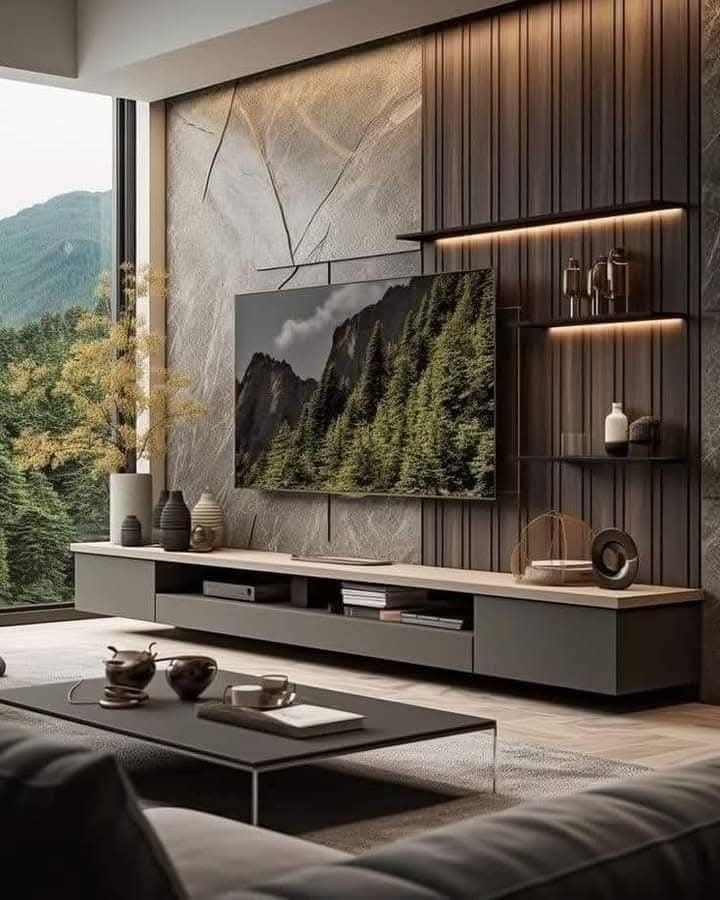
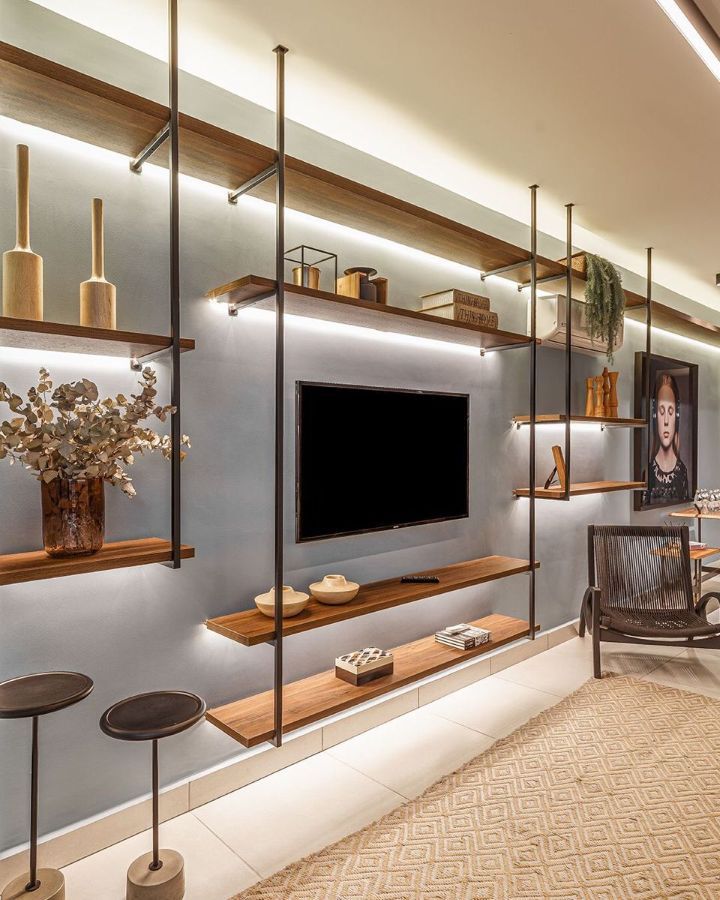
Floating TV units are a major trend for 2025, offering a minimalist design solution inspired by mid-century modern aesthetics. These wall-mounted units create open, airy spaces that make rooms appear larger while supporting clutter-free living. The design eliminates bulky floor furniture, making floor cleaning easier and providing a contemporary look that works perfectly in modern apartments.
Modular TV Units
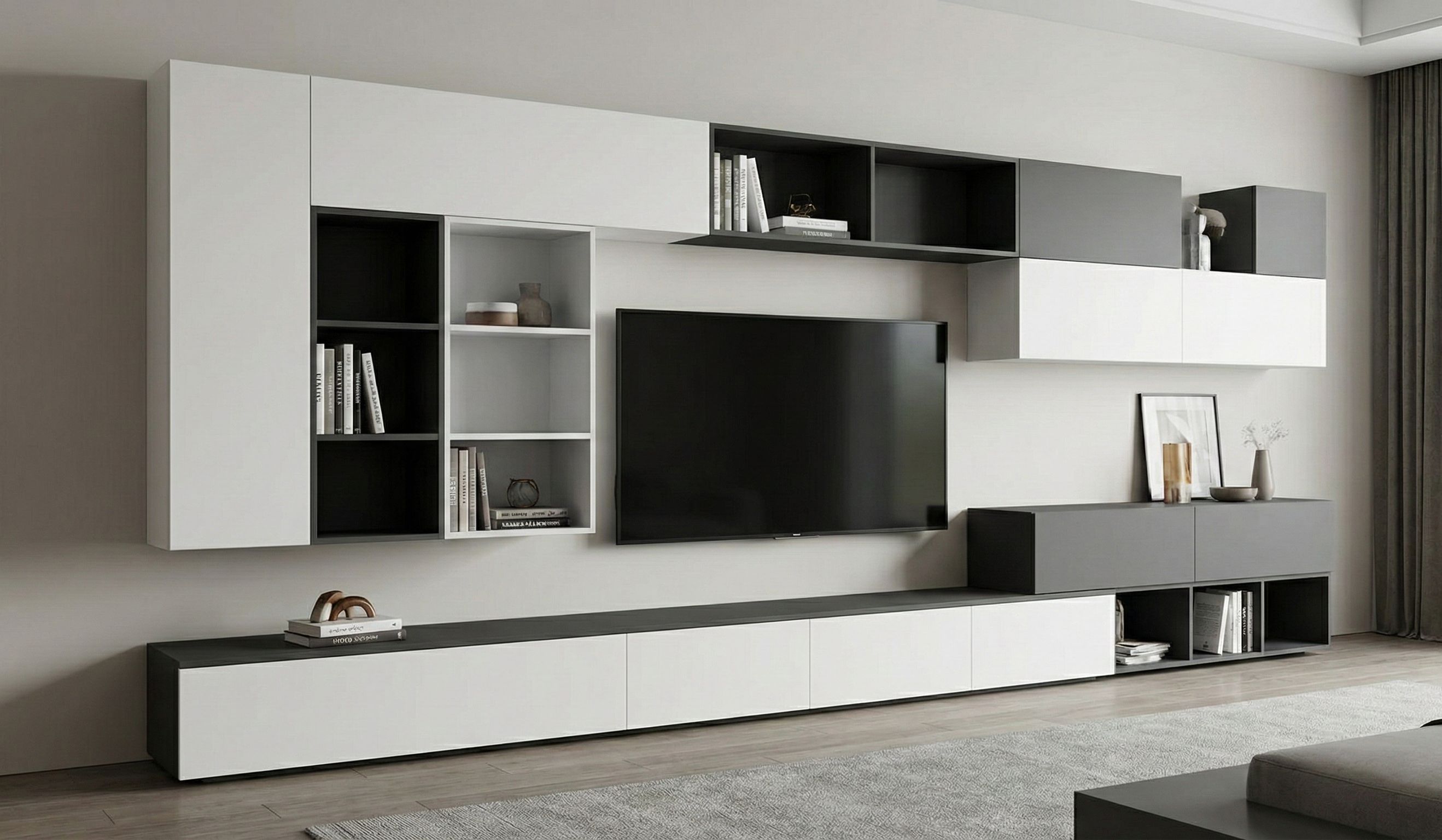
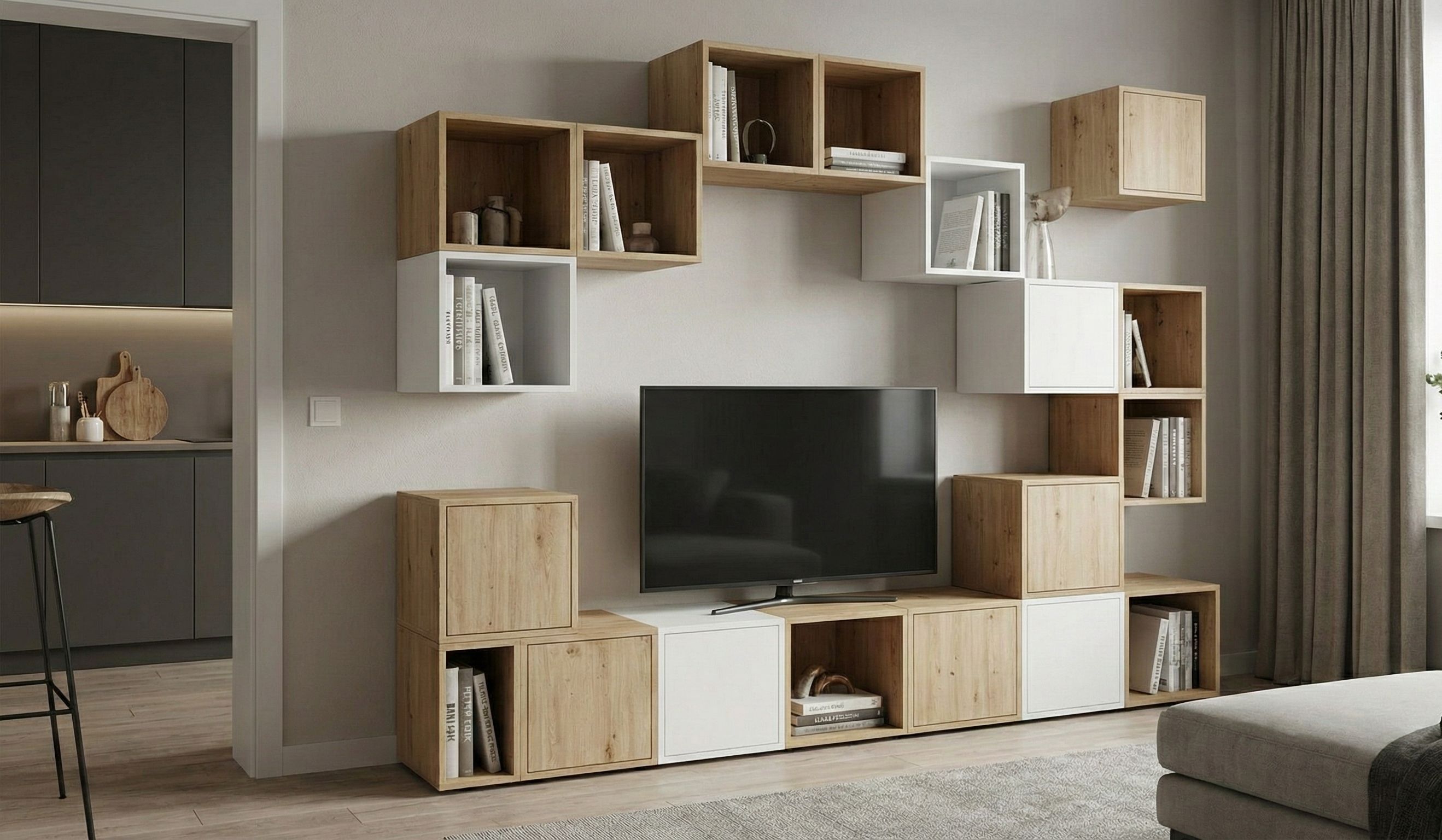
Modular TV units consist of multiple separate components that can be arranged and customized to suit your space and needs. These versatile designs typically provide storage for electronic devices, media accessories, and decorative items. The flexibility allows homeowners to adapt the configuration as their requirements change over time.
Built-In TV Units
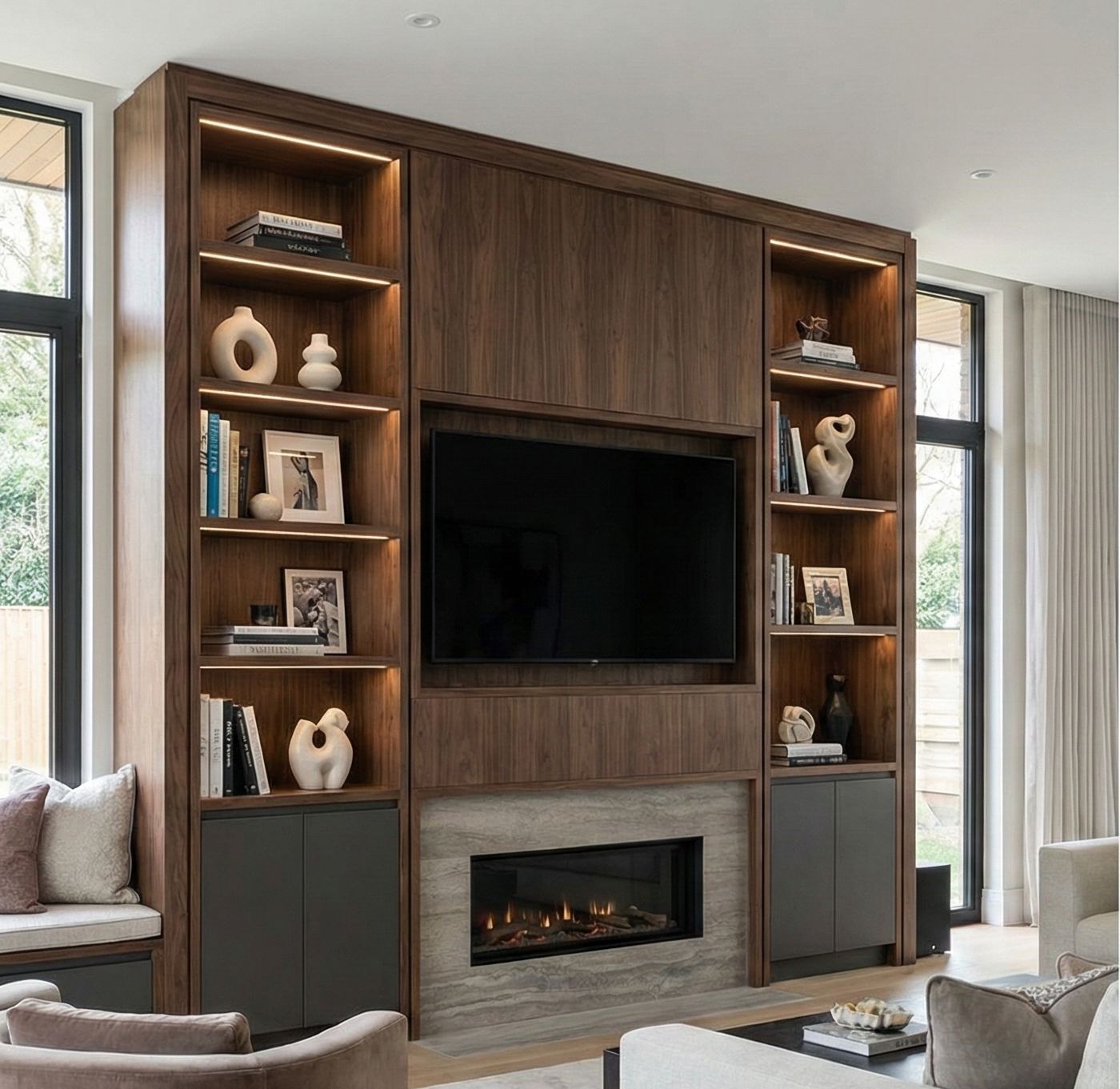
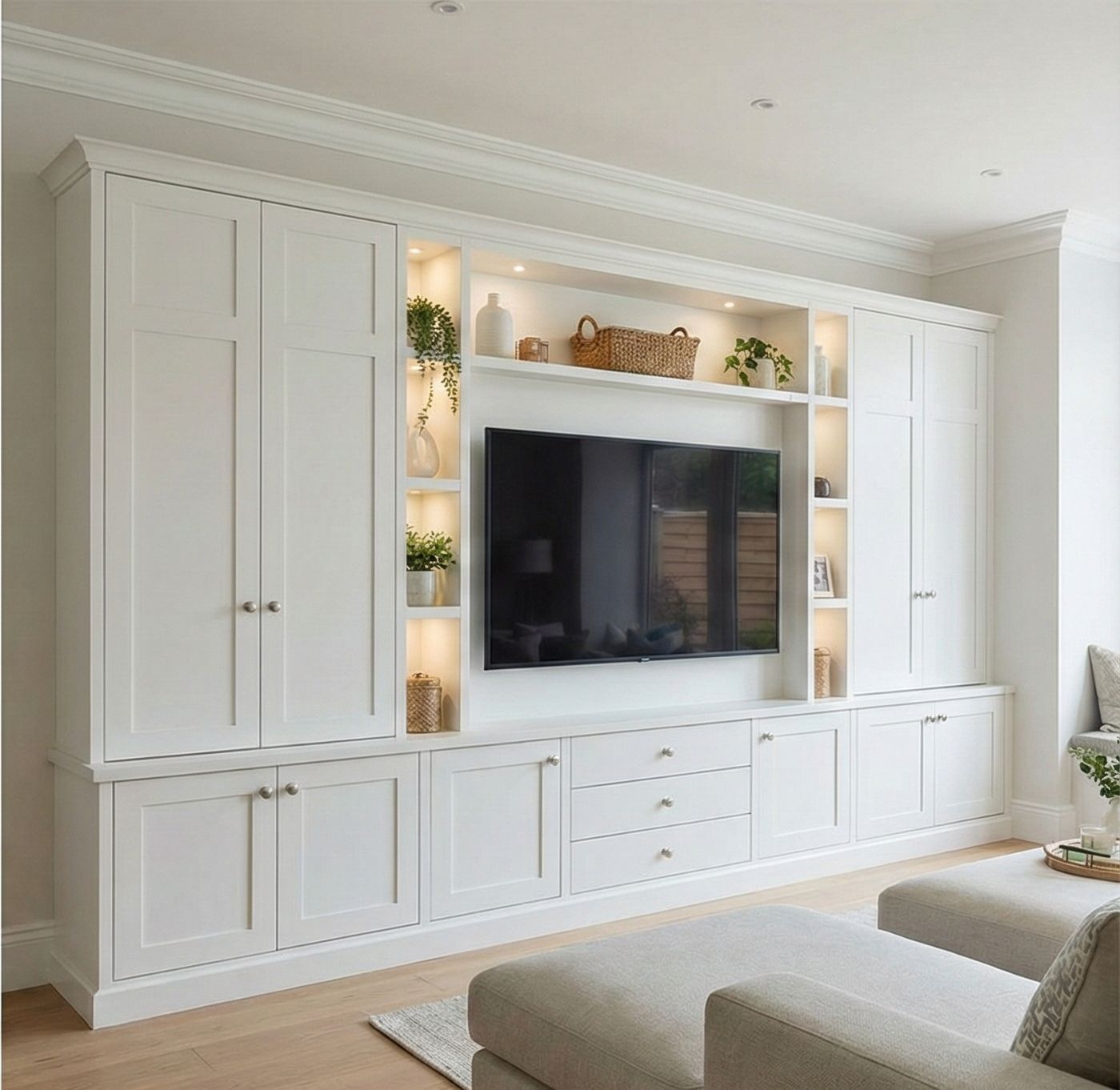
Built-in units integrate the television seamlessly into a custom wall structure, often incorporating shelving, cabinets, and decorative niches. This design choice is particularly popular in larger living rooms where the TV unit extends from floor to ceiling, creating a cohesive entertainment wall.
Minimalist TV Units
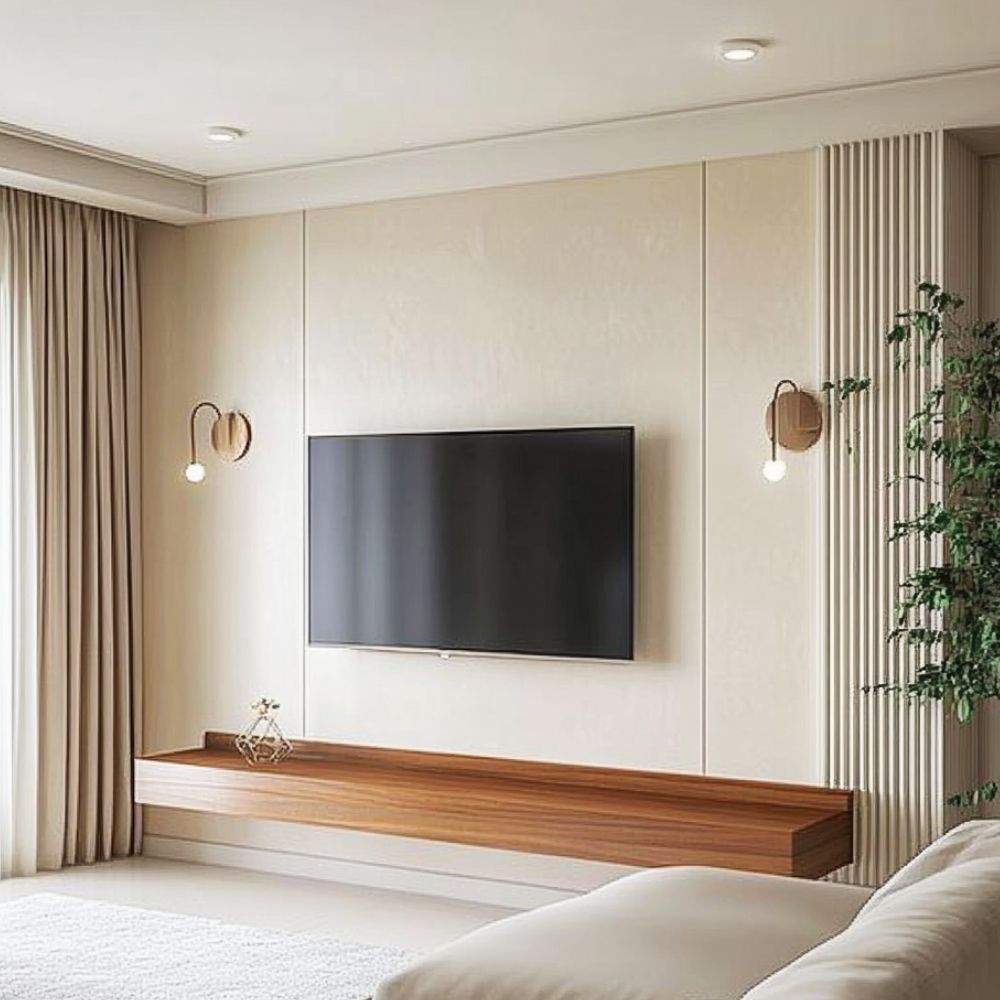
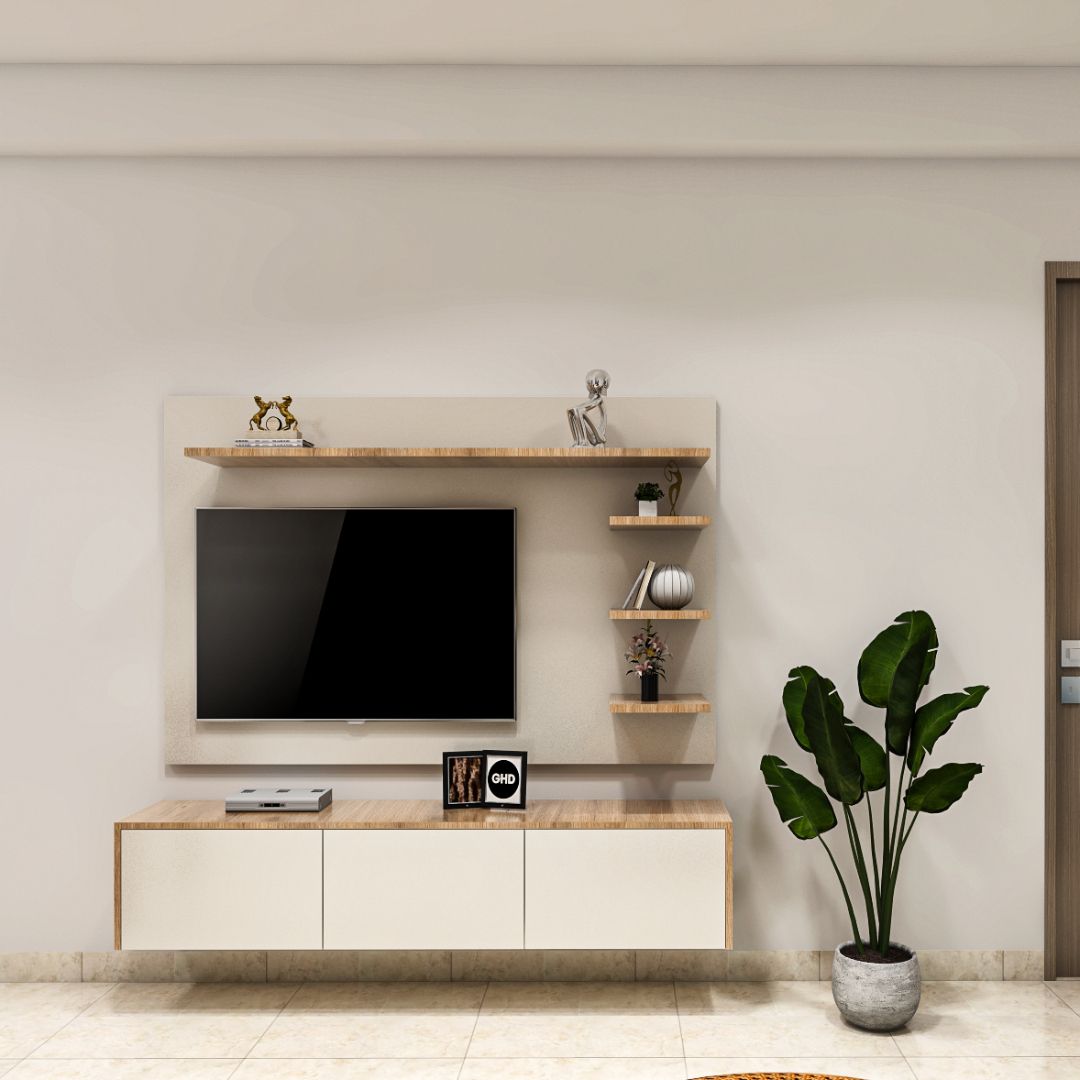
For those seeking simplicity, minimalist TV units feature clean lines and uncluttered surfaces. These designs focus on essential furniture and décor, maximizing open space and natural light. Minimalist units often incorporate hidden storage compartments to maintain that sleek, streamlined appearance.
Industrial TV Units
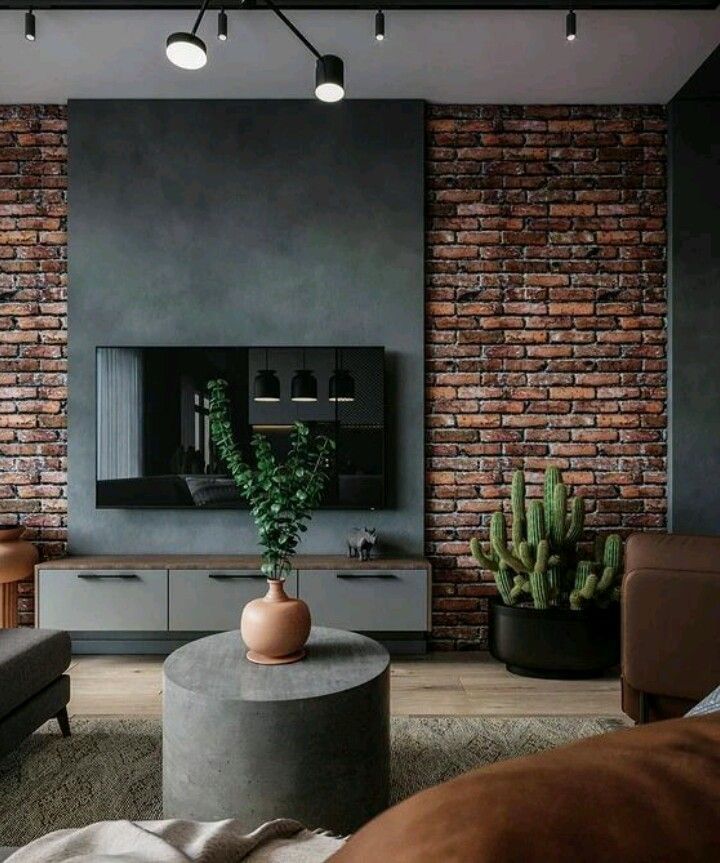
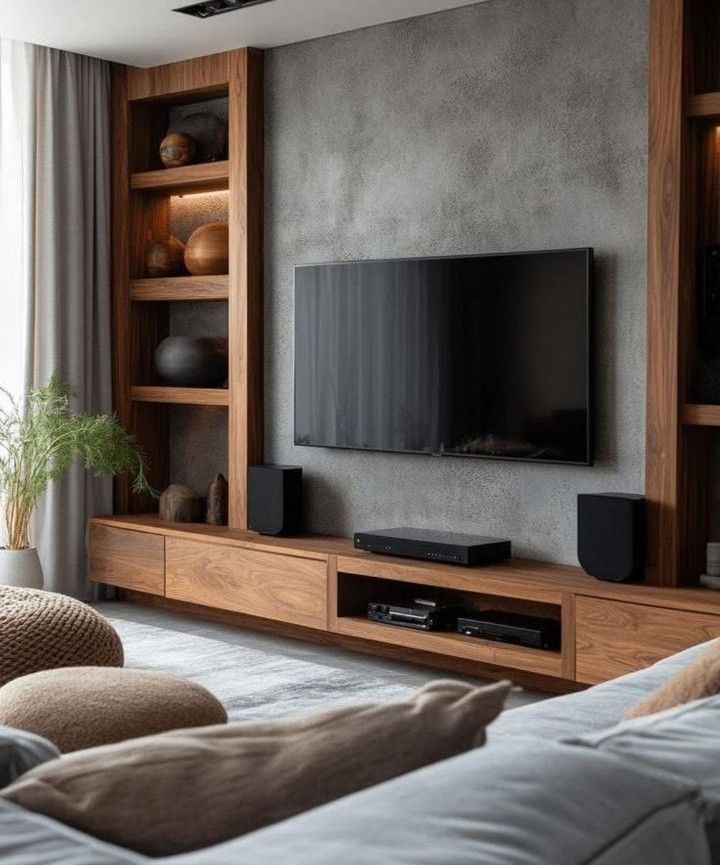
Industrial-style TV units embrace raw materials like metal, concrete, and reclaimed wood. These designs feature exposed hardware, a blend of rough and polished textures, and a utilitarian layout that reflects urban loft aesthetics. The industrial look pairs beautifully with exposed brick walls and neutral color schemes.
Materials for TV Units
Budget Considerations For TV Unit Designs
How To Achieve Your Ideal TV Unit Design
Step 1: Assess Your Space
- Measure wall dimensions precisely, accounting for corners and architectural features
- Identify optimal wall for TV placement considering natural light and seating arrangement
- Check wall condition and load-bearing capacity
- Mark outlet, switch, and architectural feature locations
- Photograph your space from multiple angles for reference
Step 2: Define Your Design Style
- Gather inspiration from design magazines, online platforms, and portfolio images
- Create mood boards combining colours, materials, and design elements
- Identify which design style resonates with your personal aesthetic
- Consider existing room décor and how the TV unit will integrate
- Determine whether you prefer minimalist, modern, luxury, or eclectic approaches
Step 3: Determine Storage & Functional Needs
- List all items requiring storage (gaming consoles, media devices, books, décor)
- Calculate required shelf space and cabinet depth
- Identify cable management requirements
- Plan for future technology additions
- Allocate dedicated zones for different item categories
Step 4: Select Materials & Finishes
- Research material durability and maintenance requirements
- Compare costs across options (laminate, veneer, solid wood)
- Choose finishes matching your design style and lighting conditions
- Verify material availability and delivery timelines
- Consider sustainability and eco-friendly options
Step 5: Plan Lighting Integration
- Decide between ambient, task, or accent lighting
- Determine LED strip placement (behind TV, under shelves, along edges)
- Plan dimmer controls for flexible lighting scenarios
- Consider interaction with existing room lighting
- Ensure proper electrical planning for safety and functionality
Step 6: Source Materials & Hire Professionals
- Get quotes from multiple sources for transparent pricing
- Verify contractor credentials, experience, and previous projects
- Review detailed project timelines and scope of work
- Establish clear communication channels for updates and modifications
- Confirm warranty coverage and post-installation support
Step 7: Installation & Quality Verification
- Supervise installation to ensure quality and accuracy
- Verify all components are installed per specifications
- Test functionality of all features (lighting, storage, ventilation)
- Ensure proper cable management and wire concealment
- Request detailed maintenance instructions and warranty documentation
Smart Storage Solutions For TV Units
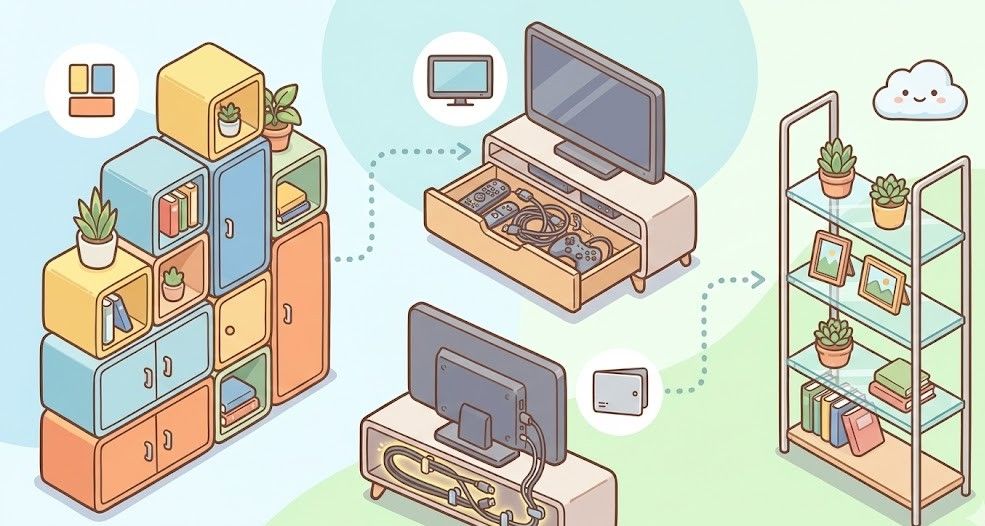
- Modular Storage Systems: Modular storage cubes and cubbies offer flexible organization options. These customizable components allow mixing open and closed shelving to suit specific needs. Stack them vertically for space-saving solutions or arrange horizontally to create low-profile media consoles.
- Hidden Compartments: TV stands with hidden pull-out shelves and drawers make it easy to keep entertainment essentials organized while maintaining clean aesthetics. Concealed storage keeps remotes, cables, game controllers, and media collections out of sight but readily accessible.
- Cable Management Systems: Modern TV units incorporate sophisticated cable management with hidden channels, rear access panels, and integrated wire guides. These features eliminate the tangled cable chaos that typically accompanies entertainment systems, creating polished, professional-looking installations.
- Display Shelving: Open shelving provides opportunities to showcase decorative items, books, plants, and collectibles alongside functional media storage. Adjustable shelves accommodate items of varying heights, while glass shelves maintain visual lightness.
Common Mistakes To Avoid When Designing TV Units
- Inadequate Size Planning: Ensure your TV unit is proportionate to both your TV size and wall dimensions
- Insufficient Storage: Underestimating storage needs leads to cluttered spaces
- Poor Viewing Height: Standard TV center should be at eye level when seated (approximately 42-48 inches from floor)
- Ignoring Cable Management: Visible wires create messy, unprofessional appearances
- Blocking Ventilation: Enclosed units without ventilation cause device overheating
- Incompatible Style: Design should complement existing décor, not clash with it
- Neglecting Weight Capacity: Especially critical for wall-mounted units
- Forgetting Future Needs: Plan for potential equipment additions or upgrades
Conclusion
Creating the perfect TV unit design combines aesthetic vision with practical functionality to transform your living space into an organized, stylish entertainment hub. With 2025's trending options ranging from sleek floating units to luxurious stone-clad wall panels, there's a design solution for every style preference and budget constraint. By carefully selecting appropriate materials, planning adequate storage, and ensuring proper installation, you can achieve a TV unit that serves as both a functional necessity and a beautiful focal point. Consider your space dimensions, lifestyle needs, and maintenance capabilities to make an informed decision that you'll enjoy for years to come.
Frequently Asked Questions
Meet the Designer
Meet the Designer
Designs for Every Budget
Get your dream home today. Let our experts help you